Our three important views are modules, component and connector, and allocation.
All of these views show the existence of objects.
E.g., the fact there is a relationship between modules A and B; the fact there is a runtime component attached to a publisher, and where hardware nodes live. They capture potential.
What Is Missing
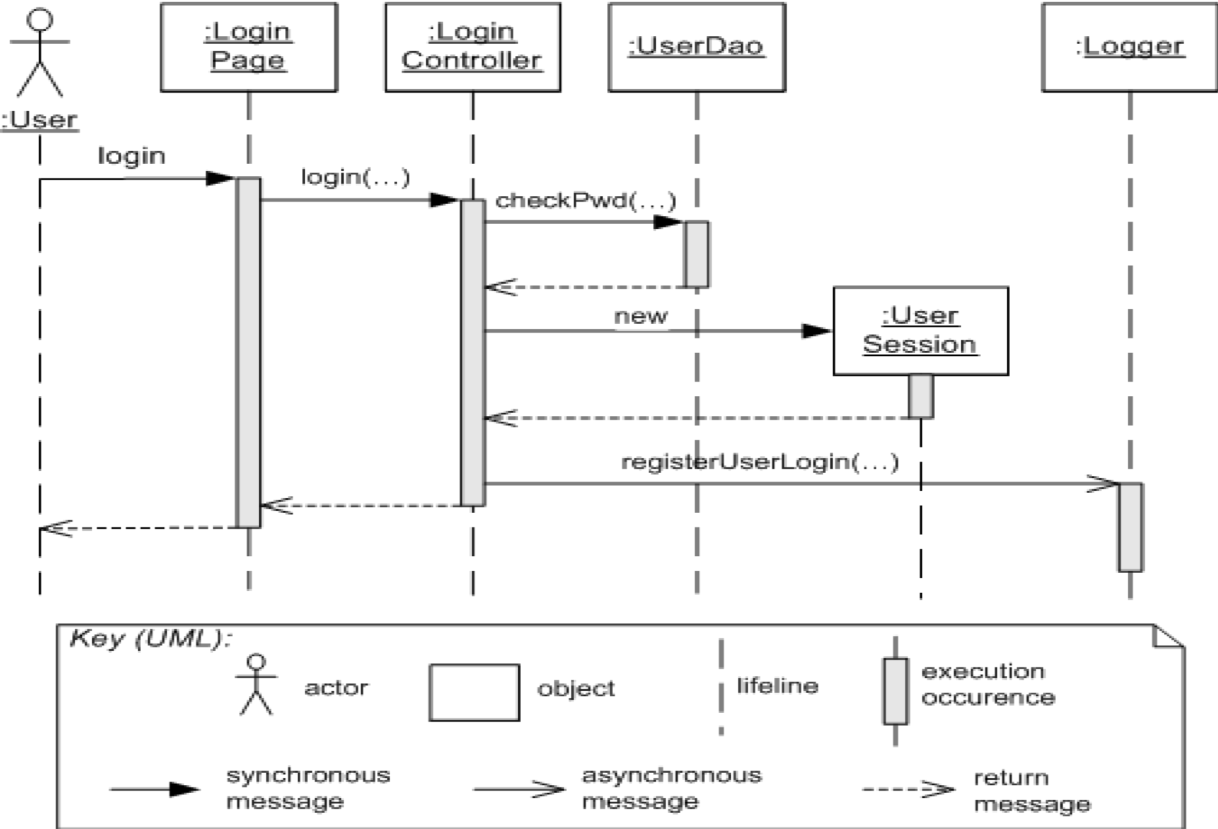
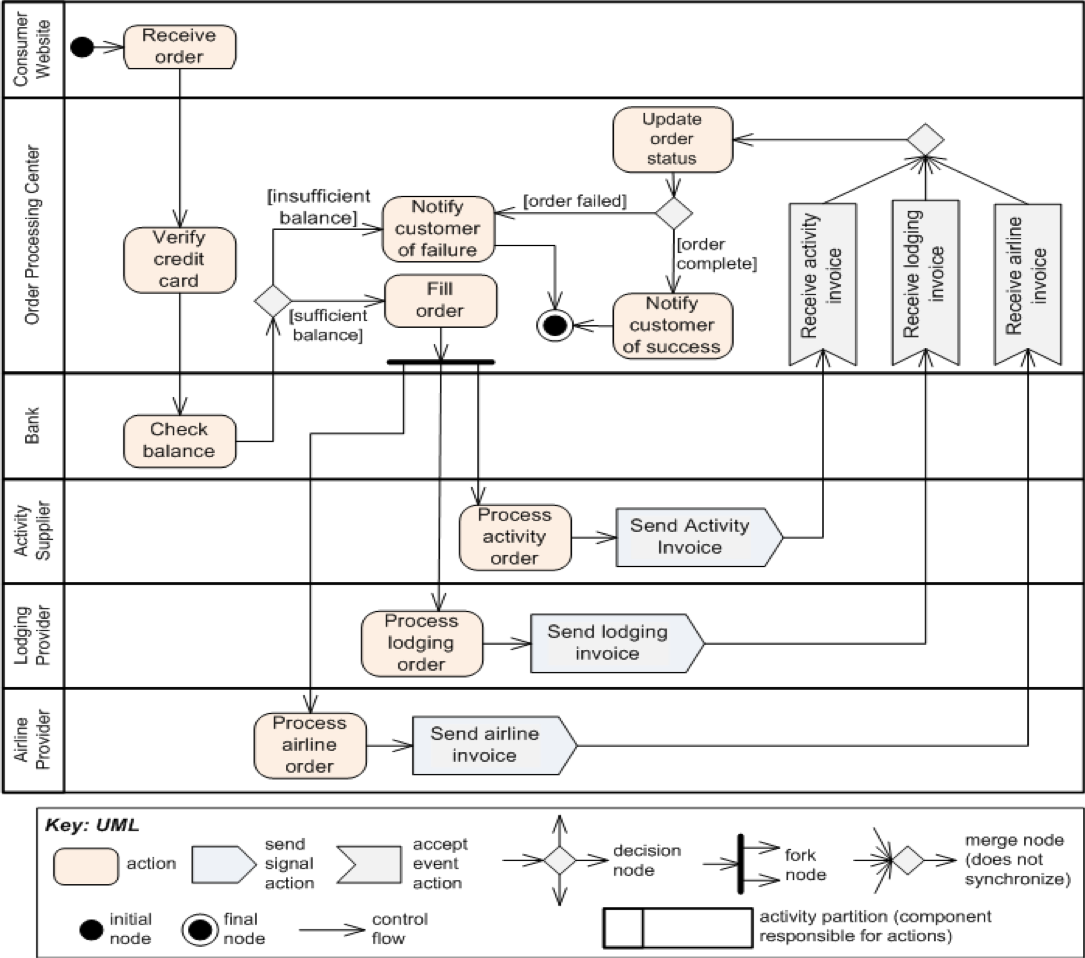
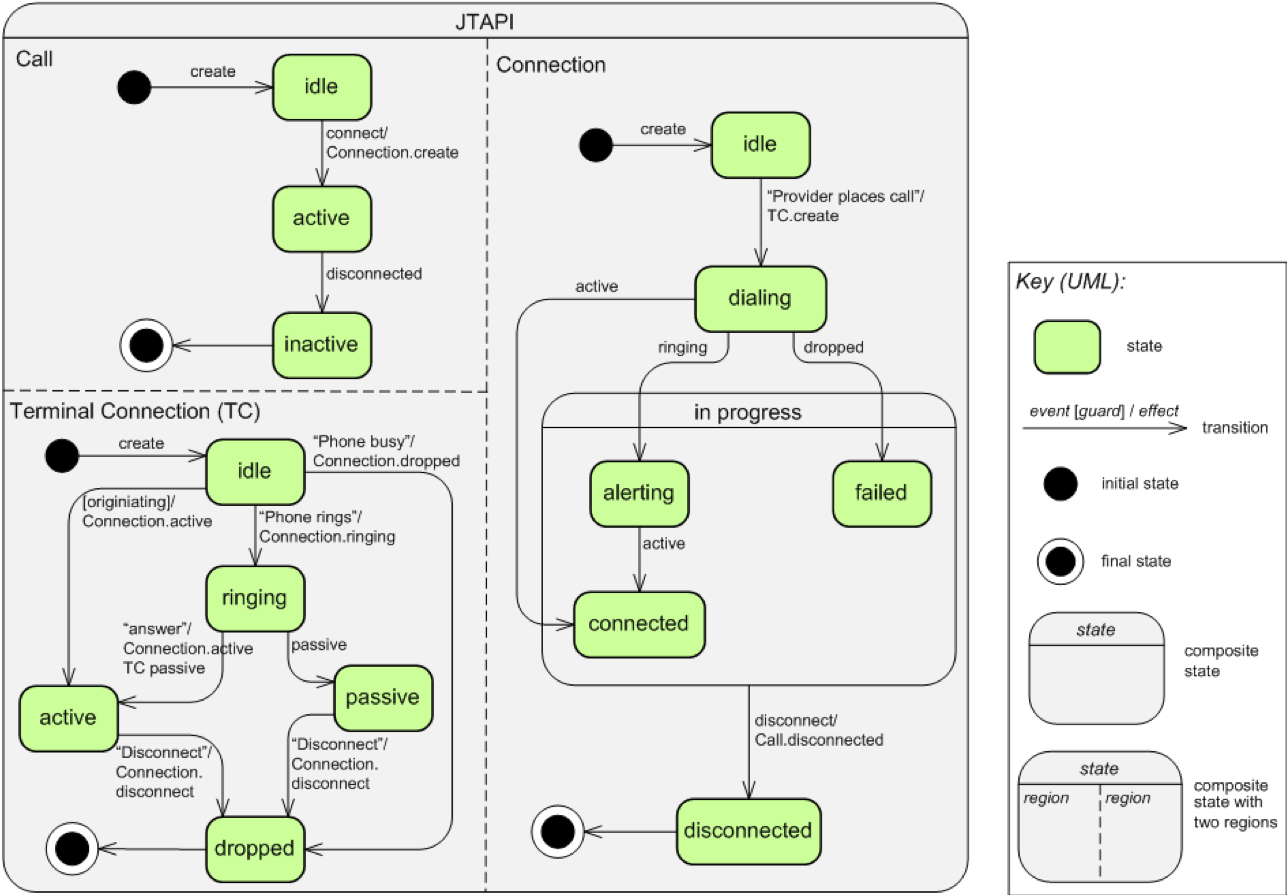
They don’t really show a pattern of interaction, the sequence of actions and behaviors.
We will associate each view (for example, a pipe and filter view) with a set of behavior descriptions; in other words, we will add some descriptions that explain how all the puzzle pieces work together.
Questions We Can Answer
Some questions behavioral docs help us answer:
In what order do components interact in this transaction?
What is the response time of this transaction?
What is the system’s throughput under these conditions?
What states does a system element take on during a transaction?
Questions
Do these elements run in parallel during this transaction?
Can the system ever deadlock?
What happens if this input is received?
How does system startup or shutdown proceed?
It helps us to reason about interaction among elements; trace to use cases and scenarios; explain how the system works to newcomers; reason about certain quality attributes like performance.
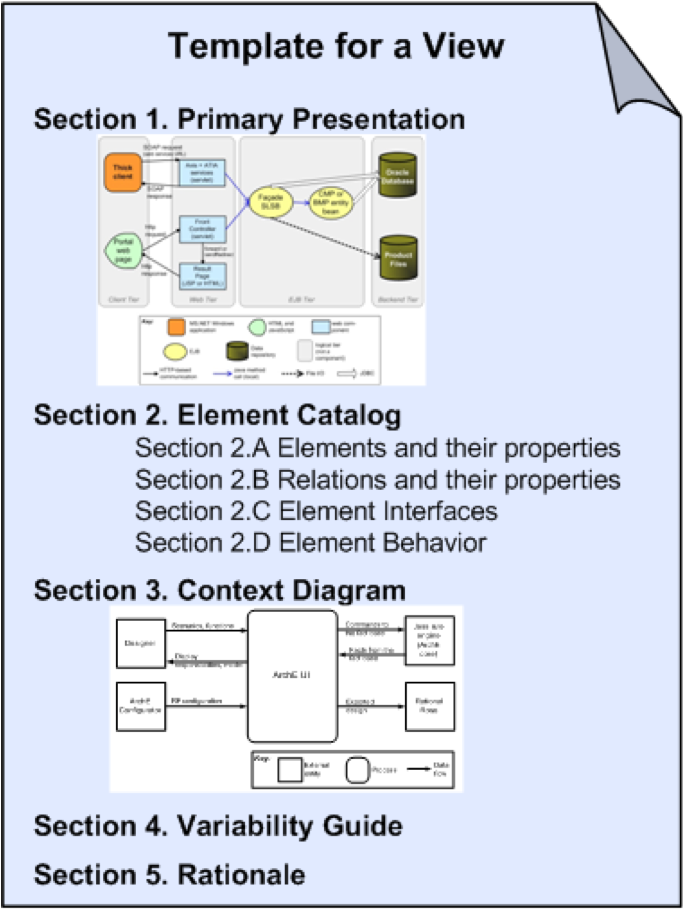
The View Template
Where should we stick anything we say about behavior?
view template
in the behavior section of the primary presentation